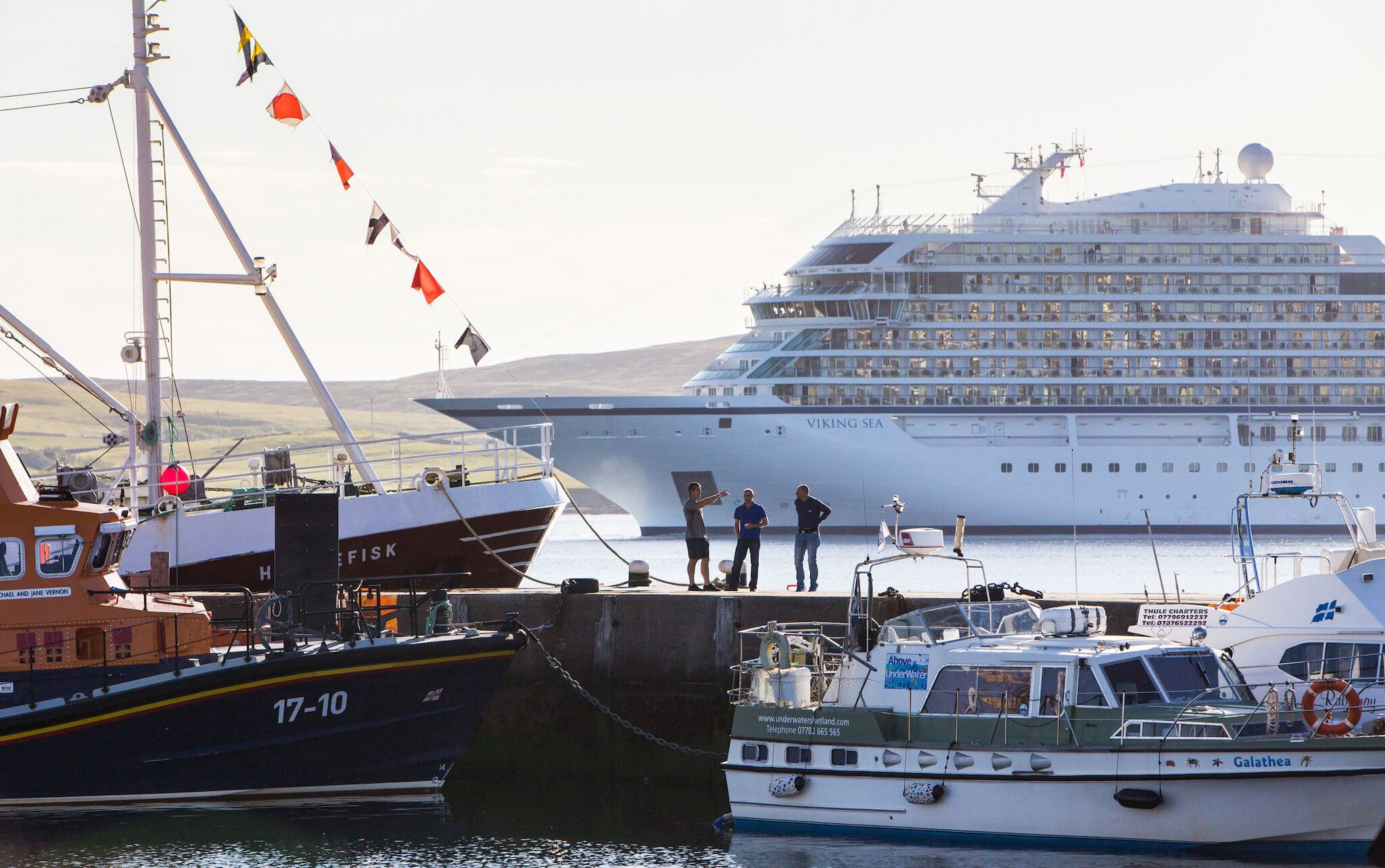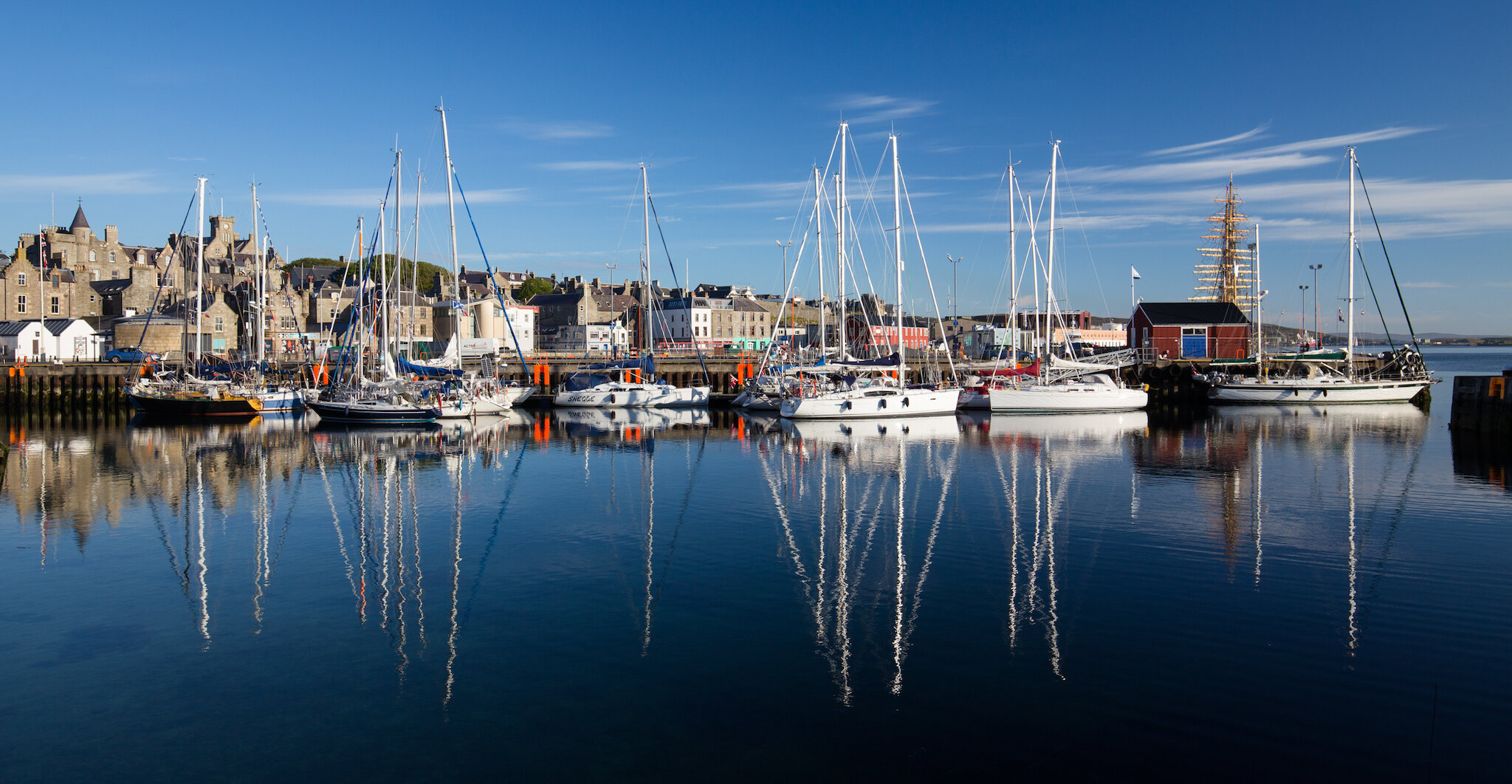

Lerwick, the capital of Shetland, is a coastal town shaped by its maritime past and sheltered natural harbour.

A quick introduction

Lerwick is Shetland's only town, with a population of about 7,500 – although about half of the islands' 22,000 people live within 10 miles of the burgh.

Founded as an unofficial marketplace to service 17th century Dutch herring fleets, Lerwick took a long time to grow. Because of its illegal status (and alleged immorality!) the straggling hamlet around the shore of Leir Wick ('muddy bay') was demolished by order of the Scalloway court in 1615 and 1625.

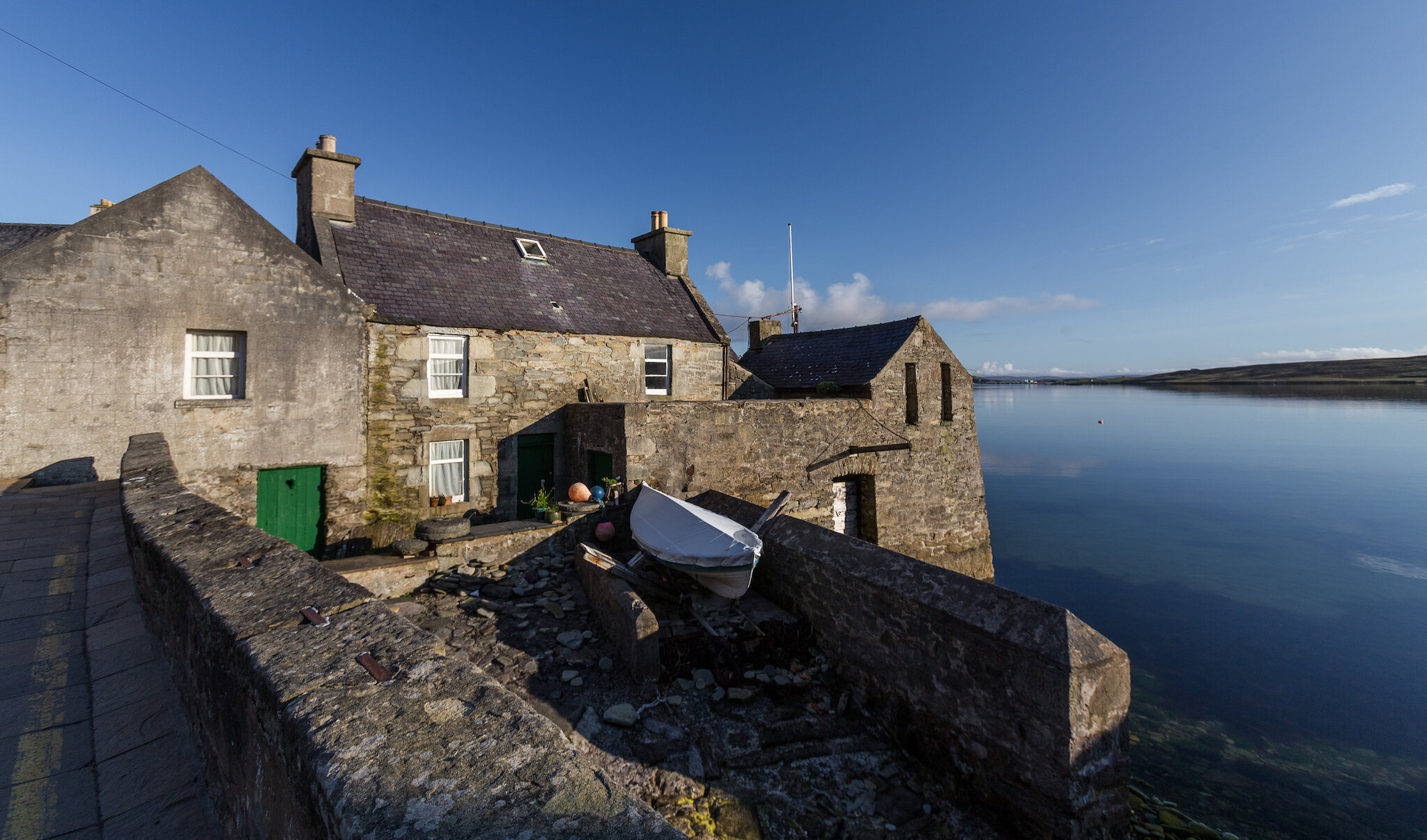
Most of the sandstone buildings on the waterfront date from the 18th century, although a few are older. The narrow main street still follows the old shoreline but modern harbour works have been built out in front of shops and warehouses that once stood in the sea.

No-one designed the old town – it just grew – but, up beyond the Hillhead, Victorian architects laid out a "new town" of spacious villas and public parks, dominated by Lerwick Town Hall – a monument to the civic pride of the 1880s.

Getting to Lerwick

Lerwick is the main port for the NorthLink ferry from Aberdeen and Kirkwall. It is 24 miles by road from Sumburgh Airport.

Where to stay

For places to stay in Lerwick, see our Accommodation page.
Download a printable Lerwick Visitor Leaflet

Open PDFarrow-right

Places to visit

Useful information
  • The main visitor information point in Lerwick is at the Shetland Museum and Archives.
  • Public toilets are located at Harbour House on the Esplanade, across from Victoria Pier in the town centre. There are also public toilets at the Knab and King George V Play Park.
  • You can access free wifi at the arts venue Mareel, the Shetland Museum and Archives and the Shetland Library.

Fascinating facts

  • You can find the house of Jimmy Perez, the main character in the BBC TV series Shetland, at the south end of Commercial Street. This example of a traditional waterside merchant’s store, shop, workshop and house is one of the most photographed buildings in Shetland. Privately owned, but exterior selfies are welcome!
  • Lerwick is said to have been built on the proceeds of smuggling! In the 1600s, Dutch fishermen arrived in Shetland for the herring fishery and traded goods both legally and illegally with locals. Evidence of illicit activity can be found in a series of tunnels that run under Commercial Street. Goods such as gin, brandy, and tobacco were unloaded from the ships and squirrelled away underground to avoid customs.

Discover more about Lerwick