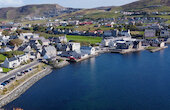
Britain's most northerly inhabited island, Unst sits at the northern edge of the Shetland archipelago, connected to Mainland Shetland by ferry via Yell.

Unst at a glance

Location

Britain's most northerly inhabited island, reached via Yell by two short ferry crossings.

Population

Approximately 640 people.

Communities

Baltasound, Haroldswick, Uyeasound, Belmont and surrounding crofting communities.

Transport links

Regular ferry services connect Unst with Yell and Fetlar, with onward connections to Mainland Shetland.

On your doorstep

SaxaVord Spaceport, Hermaness National Nature Reserve, Unst Boat Haven, Muness Castle, Britain's most northerly leisure centre and spectacular walking and wildlife.

Living in Unst

Unst is Britain's most northerly inhabited island and home to around 640 people. Living here means embracing island life in all its forms. With two ferry crossings separating Unst from Mainland Shetland, journeys to Lerwick take a little more planning, so day-to-day life is centred on the island itself.

Reaching the island from Lerwick takes around 90-120 minutes and involves a ferry crossing to Yell, a drive across the island to Gutcher, and a second ferry to Belmont. While that means trips to the Mainland are usually planned rather than spontaneous, Unst has many of the services people need close to home, including a junior high school, health centre, leisure centre, three local shops and a wide range of clubs and community organisations.

Community organisations, volunteers and local businesses all play an active role in island life. From supporting new businesses to organising festivals and developing community projects, people work together to ensure Unst continues to thrive.

Unst has a proud Norse heritage and thriving community spirit

We are adept at creating our own entertainment and organising events to bring people together.

Cheryl Jamieson, artist and designer living in Unst

Baltasound

Baltasound is the island's main settlement and the centre of everyday life in Unst. It is home to Baltasound Junior High School, the health centre, post office and Unst Leisure Centre, the most northerly leisure centre in Britain.

Residents are well served by three local shops: The Final Checkout, Skibhoul Stores, with its popular bakery, and H. Henderson's Stores (Ethel's). They provide groceries, fuel and many everyday essentials. The harbour continues to support fishing, aquaculture and marine industries, while local businesses, cafes and accommodation providers make Baltasound a busy centre throughout the year.

Haroldswick and North Unst

Haroldswick is closely associated with Unst's Viking heritage and maritime history. It's home to Unst Boat Haven, the replica Viking longship Skidbladner and the Unst Heritage Centre.

The north of the island is also home to SaxaVord Spaceport, the UK's first licensed vertical launch spaceport, reflecting Unst's long tradition of innovation. Nearby, Hermaness National Nature Reserve and Norwick Beach make this part of the island popular with walkers, wildlife enthusiasts and nature tour operators, while Norwick Up Helly Aa is one of two annual fire festivals held on Unst.


Uyeasound and Belmont

Built around one of Shetland's finest natural harbours, Uyeasound has long been connected to the sea. The village is home to Muness Castle, Greenwell's Booth and a marina, while aquaculture continues to play an important role in the local economy. Uyeasound also hosts one of Unst's two annual Up Helly Aa festivals.

Further west, Belmont is where ferries connect the island with Yell and Fetlar. The area is home to Belmont House, one of Scotland's finest Georgian houses, and combines crofts, farmland and coastline, with convenient access to the rest of Shetland via the ferry network.

  • What kind of jobs are available in Unst?

    Employment on Unst spans the public sector, aquaculture, construction, transport, tourism and hospitality. The island has many innovative businesses, including SaxaVord Spaceport, Shetland Reel distillery and companies working in renewable energy and engineering. Self-employment and small businesses also make an important contribution to the island's economy, and remote working is an option for some residents, depending on local connectivity.

  • Can I work remotely from Unst?

    Many people successfully work remotely from Unst, although internet speeds vary depending on where you live. Mobile coverage is generally good across much of the island, and fibre broadband continues to expand, but it's worth checking connectivity for any property you're considering if reliable high-speed internet is essential for your work.

  • What is community life like in Unst?

    Community life centres around the island's halls, clubs and voluntary organisations. Throughout the year, there are concerts, craft fairs, sports clubs, youth groups, community lunches, fundraising events and local festivals. Many activities are organised by volunteers, giving residents plenty of opportunities to get involved and meet people.

  • What activities are available for children and families in Unst?

    Families have access to a range of activities through Baltasound Junior High School, Unst Leisure Centre and local volunteer groups. These include swimming, football, netball, badminton, youth clubs, Brownies, Rainbows and activities for younger children, alongside community events throughout the year.

  • What leisure facilities are available in Unst?

    Unst Leisure Centre includes a swimming pool, gym, games hall, squash court and outdoor sports facilities, with a programme of activities for all ages. The island also has a range of sports clubs, including football, badminton, bowls, netball, sailing, rowing and angling, as well as walking routes, beaches and opportunities to explore the outdoors.

  • How connected is Unst?

    Unst is connected to the rest of Shetland by two regular ferry services via Yell. While travelling to Mainland Shetland requires planning around ferry timetables, many everyday services are available on the island, meaning residents don't need to make the journey regularly. Bus services link with the ferries, although most households find having access to a car the most practical option.