• Home
  • Blog
  • Shetland by Numbers: a botanist’s vital work preserved
By Alastair HamiltonAugust 6th 2026
Alastair Hamilton

Shaped by ice ages, climate and human interventions, Shetland’s environment is unique, evolved on a geological foundation so complex that the islands are designated a UNESCO Global Geopark. That has nurtured diverse flora, studied by a local botanist, Walter Scott. Self-taught, his painstaking examination of every part of Shetland produced an extraordinary legacy, which remains available not only in Shetland’s archives, but also – thanks to interventions by local organisations – in print and online.

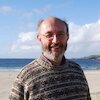
Walter Scott hailed from Easterhoull, near Scalloway, and was born on 3 March 1940. His interest in plants began early, encouraged by his family and a neighbour, and he took up the hobby of collecting and pressing them. They often visited the district of Nesting, where his first cousin, Jean, similarly fascinated, joined him in the hunt for specimens.

From 1955, he developed what was to become a lifelong interest in hawkweeds, many species of which exist in Shetland. That year was significant in two other ways: firstly, he was introduced to another botanist, Richard Palmer. The two were to become lifelong friends and collaborators. Secondly, he signed up for membership of the Botanical Society of Britain and Ireland (BSBI).

By 1958, he and Richard had concluded that their joint task should be to compile a comprehensive guide to Shetland’s flora. It was painstaking work but, by 1969, they were able to publish a plant checklist. However, it took them another 18 years to reach their goal, a Shetland flora published in 1987.

However, their work was far from done, as they continued to document new discoveries. There were further publications in 2002 and 2011. Along the way, from 1961, Walter had become a vice-county recorder for the BSBI and, in 1996, he’d been awarded an MBE for his work.

The last publication in which he was involved – with Tim Rich – was a BSBI guide to British Northern Hawkweeds; by then, as was clearly appropriate, a species of hawkweed had been named after him. Walter had meanwhile taken steps to preserve the rarer species of hawkweed, cultivating them in his garden and passing them to the Shetland Amenity Trust, whose woodland staff conserve and propagate them.

Two species native to Shetland, Mouse-eared chickweed and Red campion Alastair Hamilton

By the time they drew their work to a close, Walter and Richard had listed all 359 native plants, including the endemic Mouse-eared Chickweed found only in Unst and the Shetland Red Campion illustrated above. They also catalogued all 165 ‘alien’ (or introduced) plants, including the Rosa rugosa and Pampas Grass shown below

Two of the species listed by Walter Scott as 'alien', pampas grass and rosa rugosa. Alastair Hamilton

However, Walter’s fascination with the features of Shetland’s environment wasn't confined to plants. His travels – without a car, as he never learned to drive – took him to every part of Shetland, and that included anywhere that a plant might survive. Thus, other items on his lists included 1,238 of Shetland’s 2,494 salt-water islands, together with all 527 freshwater lochs and 348 of the 350 holms (islands) in them. He climbed to all 115 hill summits and recorded 28 standing stones.

Fresh-water islands in Hulma Water and the salt water isles of Gletness Alastair Hamilton

Other features of the landscape were catalogued with the same persistence and attention to detail that he had lavished on the flora.

Abandoned houses - here at Clumlie - and schools, this one at Hamnavoe, were listed. Alastair Hamilton

Most of these were buildings of some kind, including ruined houses (all 2,467 of them), 82 churches, 79 brochs, 28 standing stones, 55 lighthouses, 52 cemeteries, 52 public halls, 36 public houses and hotels, 35 (of 36) schools and 2 castles.

Churches such as Lunna and lighthouses - this one at Sumburgh - were listed. Alastair Hamilton

Having studied the Ordnance Survey maps of Shetland, he also managed to visit all 77 of the Ordnance Survey’s triangulation pillars and 2,238 of 2,248 kilometre squares. He walked 1,270 miles of the 1,697 miles that make up Shetland’s coastline and travelled on every one of the islands’ 240 miles of main roads.

He was also determined to reach all of Shetland’s geographical extremities, namely Out Stack, Unst, in the north; Bound Skerry, Out Skerries in the east; The Skerry, Fair Isle, in the south, and Da Rokness, Foula, in the west.

It goes without saying that this was an astonishing feat and one unlikely to be matched. Nor was it simply a matter of ticking boxes, because he spared no effort to ensure that every plant and every other feature were recorded accurately.

All his records are now held in the Shetland Archives, but he also created a website on which all these lists can still be seen. After his death in 2018 that website might not have been maintained, but for the intervention of NB Communication, the Shetland digital marketing agency which also operates this Promote Shetland site. David Nicol at NB decided that Walter’s digital legacy was far too important to be consigned to an internet grave and quietly ensured that the website remains live to this day.

David Nicol says:

"David Gifford in our team worked with Walter many years ago to set up the very simple site that's now been in place for many years. After Walter passed away, we decided we should continue renewing the domain name registration and website hosting so that the site would remain live for the world to access”.

Entirely independently, Gaada - a local artist-led social enterprise based in West Burra - produced a hard-copy version of Walter's lists, unaware that the anonymous, “mysterious benefactor” keeping the site live was NB. Daniel Clark, Gaada’s Director of Development and Curation, says:

“I was in conversation with Walter about Gaada doing a project based on his Shetland by Numbers work shortly before his sudden passing in 2018. I later produced a printed edition of Walter’s website (verbatim, apart from the layout, typesetting and other decisions required for printing and production) as at that point the Shetland by Numbers website was due to expire and I thought would be lost forever. This was before NB Communication had begun renewing it - hence our surprise and also the "mysterious benefactor" title!
Daniel continues:

“Gaada’s 2021–22 visual arts programme, Safeland, took inspiration from and responded to Walter’s life and work through a series of walks, talks, workshops and artist commissions. Shetland-based artists and a community group were invited to respond to incomplete projects within Shetland by Numbers, identified in red on the publication’s index page. Four artist books emerged from this work: Project Play by Foula Primary School (2021), Da Holmliwatters by Julie Dennison (2023), Kokkilorie by Jen Hadfield (2023) and Salt-Water Island by Sally Huband (2025).

“Gaada continues to draw inspiration from Walter’s work. As this article goes to press in 2026, it is developing a new publication with Jenny Watt exploring pigments made from natural, locally foraged plant materials.”

There’s a full description of the project at https://www.gaada.org/news/shetland-by-numbers.

For a fuller account of Walter Scott’s life and achievements, you can find online a full obituary, written by Shetland naturalist Paul Harvey for the Botanical Society of Britain and Ireland. It’s a fascinating account, on which this article draws.

It’s clear that Walter brought a quite extraordinary dedication and persistence to his task, along with the scrupulous attention to detail on which any such scientific enquiry must depend. His legacy is of inestimable value in the study of Shetland’s natural history, and it is right that it’s secure in the Archives, in print and on the Shetland by Numbers website.