• Home
  • Blog
  • A dream paddle to Muckle Flugga: exploring Shetland's northern edge
By Promote ShetlandAugust 6th 2026

Kayaking in Shetland offers spectacular opportunities to explore the rugged and dramatic coastline and the wildlife that inhabits it. Nowhere more so than Muckle Flugga and Out Stack, the islands at the top of the UK. Doug Cooper from Scottish Sea Kayaking fulfilled a long-held ambition to venture to Britain's most northerly lighthouse. He shares his story in this post.

Why sea kayakers return to Shetland

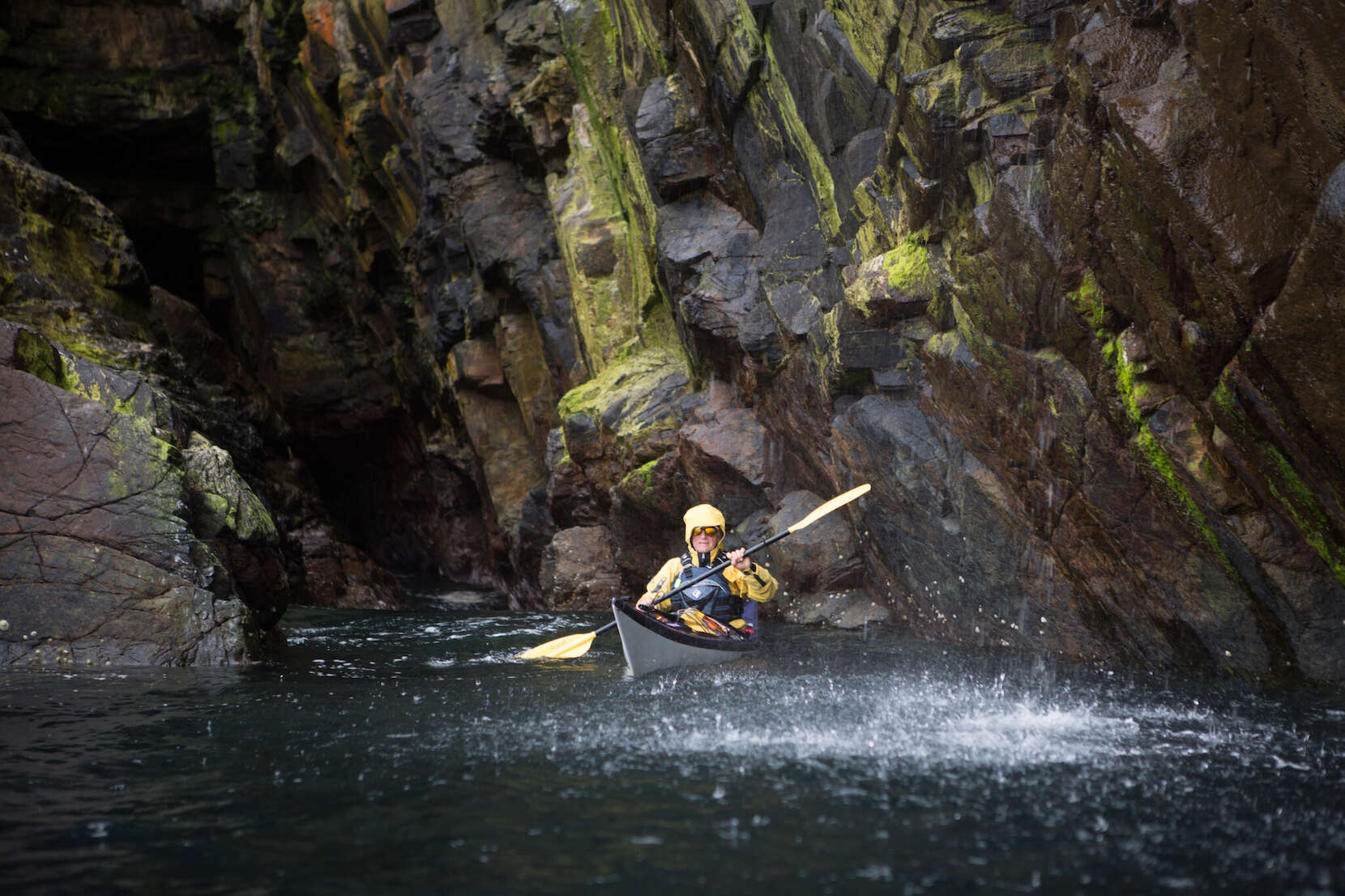
Shetland has long held a special place in the hearts of sea kayakers. Surrounded by the Atlantic Ocean and the North Sea, the islands offer a dramatically rugged coastline shaped by wind, waves and time.

Towering cliffs, spectacular sea stacks, hidden caves and natural arches create endless opportunities for exploration, while encounters with seabirds, seals, otters and even orcas make every journey memorable.

But what draws many people back isn't just the scenery. It's the feeling of discovery, the warmth of the welcome and the chance to experience a place that remains deeply connected to its landscapes, wildlife and communities.

Exploring by sea kayak offers a different perspective of the islands and what makes them special.

The Shetland Sea Kayak Symposium

My latest visit was for the Shetland Sea Kayak Symposium, a biennial event organised by local volunteers that brings together paddlers from across the UK and beyond.

Despite typical Shetland weather bringing wind, rain and grey skies, more than 100 paddlers took to the water each day.

Of course, the paddling was exceptional, but some of the most memorable moments happened ashore: conversations over coffee, homemade baking, new friendships and a lively ceilidh that showcased the community spirit visitors often remember long after they return home.

Waiting for the right conditions

Over the years I've learnt that sea kayaking in Shetland is all about playing the long game. The weather decides what you paddle, not your ambitions.

If Shetland is the icing on Scotland's sea kayaking cake, then Muckle Flugga is the cherry on top. Home to Britain's northernmost lighthouse, it stands at the very edge of our world and can only be reached when weather, wind and tide finally align.

It's worth waiting for, because when the opportunity arises, it is a wonderful adventure.

With the 2026 symposium finished and a rare weather window appearing in the forecast, I headed north to Unst, Britain's northernmost inhabited island. From the Lighthouse Shore Station, blue skies and calm conditions offered an opportunity that doesn't come around often.

Rounding Hermaness, the scale of the place became impossible to ignore. The Atlantic stretched away to the west, the North Sea to the east. Thousands of gannets wheeled overhead while relentless swell exploded against the cliffs. And this was considered a calm day.

Moments like this remind you why Shetland continues to capture the imagination of paddlers, walkers, photographers and wildlife enthusiasts alike.

While many visitors experience Muckle Flugga from the spectacular Hermaness National Nature Reserve, reaching it by sea offers a completely different perspective on one of Shetland's most iconic landmarks. Whether viewed from the cliffs, the ferry to Unst, or, on rare occasions, from a kayak, it remains one of those places that stays with you long after you've left.

Britain's northernmost lighthouse

A kilometre offshore, the skerry that makes up Muckle Flugga stood clearly visible, with the incredible lighthouse perched high atop.

Although only a short distance away, with up to 5 knots of tide, a funnelling Force 3-4 wind and the ‘small’ 1.4m swell, the crossing did not feel easy.

Arriving in the lee of Muckle Flugga, sheltered from the wind and tucked into the tidal eddy, you'd think it was finally time to relax. It wasn't! It was now time to find the notorious landing, which may or may not be possible depending on the swell and how brave I was feeling.

Sitting beneath the old landing platform, I watched the swell. Every set mattered. Landing solo on Muckle Flugga isn't something to rush, and I was weighing up whether I could get ashore without damaging either the kayak or myself. Eventually a gap appeared. Fingers crossed, I committed. A few seconds later I was standing on Muckle Flugga – the top tip of the UK.

Why Muckle Flugga was worth wait

Once the kayak was safely secured, I could tackle the steep stone steps leading to the lighthouse, knowing relatively few feet had trodden them before.

It was an incredible, if slightly tiring, climb past many puffins, nesting fulmars and Arctic terns. I arrived at the top to be greeted by the awe-inspiring Stevenson lighthouse, first lit in 1858.

From here the views stretched south across Shetland and north into the vast ocean.

Afterwards, as the tide, wind and swell carried me back towards Unst, I found myself reflecting on what sea kayaking makes possible. Some journeys are memorable because they're challenging. Others because they're beautiful.

Now and then one manages to be both.

For years, Muckle Flugga had remained an ambition rather than a destination. But standing beside Britain's northernmost lighthouse, surrounded by seabirds and ocean in every direction, I realised something. The best adventures are the ones worth waiting for.

In Shetland, those moments of discovery seem to be around every corner.

Uninhabited islands, deserted beaches and countless sea caves are waiting to be explored - discover more about sea kayaking in Shetland.